Materials and finishes field guide
Quick take
A Pergola should make your backyard feel cooler, calmer, and a little more like your favorite patio in Uptown—without turning maintenance into your new weekend…
In this guide 11 sections
- Why Alumawood makes money sense in DFW
- Upfront price vs. lifetime cost (where the math gets friendly)
- Cooler shade, happier AC: comfort you can measure
- Durability math: storms, sun, and the long game
- HOA friendly and resale smart
- Maintenance: time is money (and Saturdays are short)
- Design flexibility without the fuss
- Real numbers: sample scenarios and payback
- Common questions Dallas homeowners ask us
- Why homeowners choose Dallas Pergola Company
- Ready to run the numbers for your home?
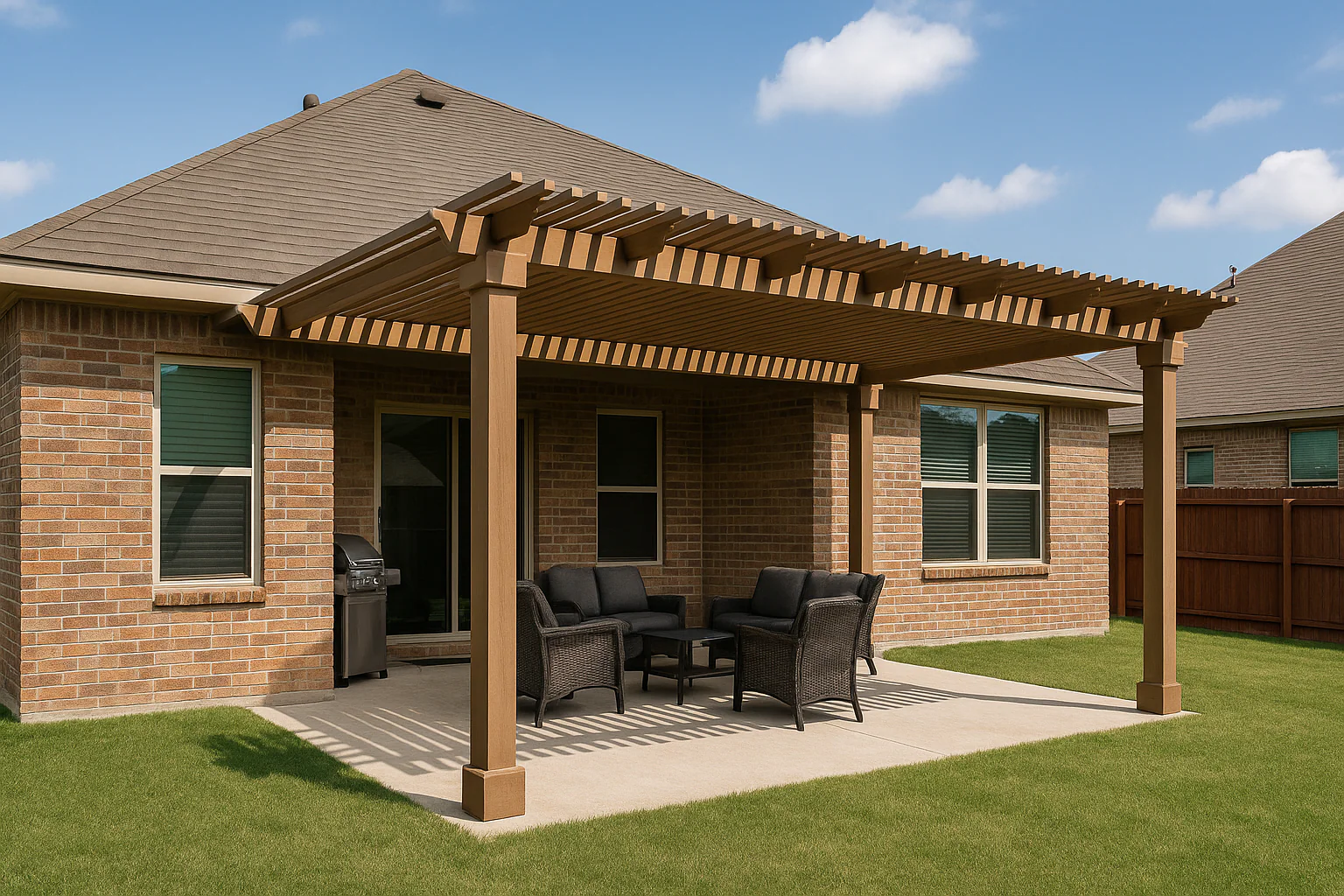
A Pergola should make your backyard feel cooler, calmer, and a little more like your favorite patio in Uptown—without turning maintenance into your new weekend job. That’s why so many Dallas–Fort Worth homeowners ask us about Alumawood. It looks like real wood, acts like metal, and pencils out better than you might think.
Why Alumawood makes money sense in DFW
Here’s the thing: North Texas is tough on outdoor structures. We get triple-digit heat, UV that cooks finishes, surprise hail, and wind that loves to rattle anything not fastened twice. Real wood is gorgeous on day one, sure; but sun, rain, and insects don’t care how much you love that cedar glow.
Alumawood—an embossed, powder-coated aluminum product originally popularized by Amerimax—gives you the look of wood without the rot, warping, or termite drama. It won’t splinter or crack. It shrugs off sun. And because color is baked into the finish, you won’t be staining it every other summer.
For homeowners, the cost benefit is simple: fewer repairs, fewer “honey-do” weekends, and a structure that still looks sharp when the neighbors’ beam ends are curling. In other words, it stays good-looking with far less effort.
Alumawood pergola Dallas projects also tend to sail through HOAs when matched to trim Colors and rooflines—clean lines and consistent finish help.
Upfront price vs. lifetime cost (where the math gets friendly)
Let me explain the basic equation most folks run. You compare what you pay now with what you’ll pay—and do—over time. Materials are just the start; maintenance and longevity drive the real total.
Here’s a quick, DFW-flavored snapshot. These are ballpark figures; your design, size, and site access matter.
- Material (12×16 pergola) — Typical Installed Cost — 10-Year Maintenance
- Cedar/Redwood — $7,500–$12,500 — $2,000–$4,500 (stain/seal/repairs)
- Pressure-Treated Wood — $6,000–$9,000 — $2,500–$5,000
- Alumawood — $8,000–$13,500 — $200–$600 (cleaning
Note: Prices vary with design complexity, attachments, electrical, and market conditions. We’ll verify everything during your site visit.
What actually moves the price needle?
- Size and span: Bigger footprint, taller posts, and longer beam spans affect material and engineering.
- Attached vs. freestanding: Attachments need ledger work, flashings, sometimes structural checks; freestanding adds footings.
- Lattice vs. solid cover: Lattice provides filtered shade; solid covers or insulated panels cost more but offer rain protection.
- Finishes and trims: End cuts, columns (standard post vs. wrapped), and decorative details add nice curb appeal—and line items.
- Electrical: Ceiling fans, recessed lights, and convenience outlets add value and comfort; they also require licensed work.
- Permits and HOA packages: We handle drawings, submittals, and inspections—smoother process, less friction.
If you line up 10 years of ownership, the “pricier” option often ends up less expensive because you’re not re-staining, replacing cracked boards, or fixing rot. That’s the quiet win of a low-maintenance pergola.
Cooler shade, happier AC: comfort you can measure
Shade quality matters in Texas. A good Alumawood lattice can drop perceived temperatures on the patio by 10–15°F, depending on orientation and color. Lighter finishes reflect more sun and feel cooler to the touch. Solid covers push comfort further: you get dry shade during pop-up storms and more consistent temperatures on the slab.
There’s a small but real bonus indoors too. Shading west-facing windows and doors reduces solar gain; that can trim afternoon AC run time a bit. We’ve heard from clients in Frisco and Mansfield who noticed more “even” cooling after we shaded their patio doors. Results vary, but it’s a nice side effect—and it feels great during those 5 p.m. heat spikes.
pergola cost Dallas-Fort Worth math isn’t just dollars—it’s sweat saved in August.
Durability math: storms, sun, and the long game
Alumawood’s baked-on finish resists fading and chalking far better than painted timber. The material doesn’t wick moisture, so it won’t swell, twist, or split after a rainy week. Termites? Not a factor. And the hardware we use is designed for the outdoors; we’re not raiding the indoor aisle and hoping.
A quick truth-in-advertising moment: aluminum can dent in severe hail. Wood can, too—just differently. The upside is that Alumawood won’t soak up water or shed its finish afterward, so performance stays steady even if a big storm leaves a scuff. We also tie everything together with proper footings and connections to meet local wind expectations.
You want something you won’t babysit. This is it.
HOA friendly and resale smart
You know what? Buyers love a finished backyard in DFW. A neat, shade-giving structure shows up in listing photos and in offers. While we won’t claim an exact dollar-for-dollar return, local agents tell us outdoor living regularly helps homes sell faster—especially when the install looks clean and intentional.
HOAs also tend to like Alumawood because:
- Consistent look: Factory colors stay true, which keeps neighborhoods tidy.
- Clear documentation: Spec sheets, wind ratings, and drawings make approvals smoother.
- Scaleable design: You can start with lattice and add a solid section later, still matching the finish.
It’s form meeting function without drama.
Maintenance: time is money (and Saturdays are short)
Wood pergolas need love—washing, sanding rough spots, staining or sealing every couple of years. That’s materials, ladders, and at least one good weekend—twice per cycle if it rains at the wrong time.
Alumawood’s “routine” is simple: rinse with a hose, maybe a light soap wash if the oak pollen goes wild. Fans and lights get a quick dust. That’s it. Your pergola looks like it did last spring without you smelling like stain for three days.
If the idea of swapping chores for a slow Saturday lunch at Mi Cocina sounds right, you get the point.
Design flexibility without the fuss
Technically, a pergola is open-roofed—but around DFW, we’ll call both open lattice and solid covers “pergolas” because homeowners ask for both. Mild contradiction, we know. The good news is Alumawood handles either.
- Lattice (open): Filtered light, breezy, and budget-friendly. Great if you like a natural dappled shade.
- Solid cover: Rain protection and stronger heat relief. Add a fan, some can lights, and you’ve got an outdoor room.
- Insulated roof panels: Thicker profiles for cleaner lines and even cooler shade.
- Smart add-ons: Integrated gutters, privacy screens, TV backing, heaters, dimmable LEDs—make it your space.
We also match roof pitch on attached structures so things look like they were born with your house—not bolted on as an afterthought. That’s where a seasoned pergola installer in DFW earns its keep.
Real numbers: sample scenarios and payback
Every yard is different, but homeowners appreciate a starting point. Below are common scenarios we build across Dallas, Frisco, Plano, Keller, and beyond.
- Project Type — Approx Installed — 10-Year Total (est.)
- 12×12 attached lattice (Alumawood) — $6,500–$9,500 — $6,800–$10,100
- 12×20 freestanding solid cover (Alumawood) — $11,500–$17,500 — $11,900–$18,300
- 14×18 attached lattice w/ fan & lights (Alumawood) — $9,500–$14,500 — $9,900–$15,400
For comparison, similarly sized cedar versions usually start lower up front but climb past Alumawood over 8–10 years due to finish work and repairs. And you’ll spend far more time keeping them happy.
We’ll confirm footing depth, electrical, HOA requirements, and shade studies on site. No surprises, no vague allowances.
Common questions Dallas homeowners ask us
- Will it get too hot to touch? Lighter colors stay cooler. Aluminum sheds heat faster than wood, and with a fan moving air, comfort jumps.
- What wind ratings do you design for? We follow local building codes and engineering guidance for your city, soil, and exposure. Corner lots and open fields get special attention.
- Does it fade? Over many years, all finishes weather. Alumawood’s baked coating holds color far longer than painted wood. Clean it gently; skip harsh abrasives.
- Can you run electrical? Yes. We integrate fan boxes, lighting, and switched outlets with licensed electricians.
- What about hail? Normal hail is fine. Severe hail can dent; structure remains sound. If insurance gets involved, we’ll document conditions.
- How long does installation take? Most projects install in 1–3 days once permits/HOA are cleared. Larger builds can take a touch longer.
If you’ve got a quirky yard or Pool equipment in the way, don’t worry—we’ve probably built around it before.
Why homeowners choose Dallas Pergola Company
We’re local, which means we know why the south side of your patio bakes and how Frisco HOAs think about color names. Our crews are meticulous, our designs are practical, and our communication stays clear.
- Design clarity: 3D renderings and material samples help you see shade lines and color in your own space.
- Permit + HOA help: We prepare drawings, handle submittals, and meet inspectors so you don’t have to.
- Quality hardware: Proper footings, corrosion-resistant fasteners, tidy electrical—details you’ll feel later.
- Clean installs: Respect for your landscaping, daily clean-up, and a punch list that actually gets punched.
It’s your backyard. We just help it feel like the place you want to be.
Ready to run the numbers for your home?
If you’re weighing wood against Alumawood, or lattice versus a solid cover, we’ll show you clear pricing, shade options, and the lifetime costs side by side. No pressure—just straight answers and a design that fits your house and your habits.
Call Dallas Pergola Company at 214-624-7083 or Request a Free Quote. We’ll stop by, measure carefully, and map out a pergola that looks right, lasts long, and actually makes the Texas heat feel friendly.