Shade planning field guide
Quick take
Patio shade isn’t just a nice-to-have in North Texas—it’s the difference between a patio you wave at and a patio you live on. The right setup cools the…
In this guide 10 sections
- Why Patio Shades Matter in DFW Heat
- Types of Patio Shades (What Works and Why)
- Material Choices That Stand Up to Texas Weather
- Benefits You Can Feel: Comfort, Energy, Privacy
- Smart Features and Add-Ons
- Installation 101: What to Expect
- Maintenance and Longevity
- Costs and Value in DFW
- Why Dallas Pergola Company?
- Ready to Bring the Shade? Call Us Today
Patio shade isn’t just a nice-to-have in North Texas—it’s the difference between a patio you wave at and a patio you live on. The right setup cools the space, protects your furniture, and makes weeknights outside feel easy. If you’ve ever tried to enjoy a west-facing deck at 5:30 p.m. in August, you know exactly what we mean.
Why Patio Shades Matter in DFW Heat
Our sun is no joke. Triple digits, a glare that bounces off stone like a mirror, and hot winds that roll right through. The good news? Well-chosen patio shades can take the edge off—the kind of change you can feel in your shoulders when you finally sit down with cold tea and a little breeze.
- Lower temps where it counts: Exterior shading can cut heat gain on west-facing glass by as much as 70%+ and drop perceived temperatures on a patio by 10–20°F. That’s the difference between “five minutes and I’m back inside” and “let’s stay for dessert.”
- Protect your stuff: UV light fades cushions, rugs, and wood finishes fast. Shade means longer life for your furniture.
- Save on cooling: Less sun blasting the back windows means your AC isn’t fighting a losing battle. Many homes see noticeable summer savings, especially on west and south exposures.
- Privacy, without the cave: The right fabric blocks views in—while you can still see out.
- Beat the bugs and wind: Certain systems (like motorized Patio Screens ) cut wind, pollen, and mosquitoes—huge win for spring and fall. And yes—shade can be too much. Total blackout can feel gloomy and trap heat if airflow is poor. That’s why we balance shade density with ventilation and view.
Types of Patio Shades (What Works and Why)
Different patios, different needs. A covered porch in Plano with afternoon glare isn’t the same as a sunny Pool deck in Frisco. Here’s how the common solutions stack up.
- Retractable Awnings: Fabric awnings project out from the house to create shade on demand. Great for sun control over decks and sliding doors. Quick to deploy; retract during storms.
- Motorized Screens (Zip Screens): Vertical shades that run in side tracks, sealing the edges. They block sun, wind, and bugs—ideal for turning a patio into an outdoor room.
- Pergola Canopies (Sliding or Tension Fabric): Fabric that rides under a pergola, sliding open or closed. Charming look, solid shade, and easy to adjust.
- Adjustable Louvered Pergolas: Aluminum roofs with rotating slats. Tilt to control sun, spill rain off your furniture, and even close during light showers.
- Shade Sails: Tensioned HDPE fabric triangles or rectangles. Clean lines, big coverage over yards or play spaces—love these for modern looks or pools.
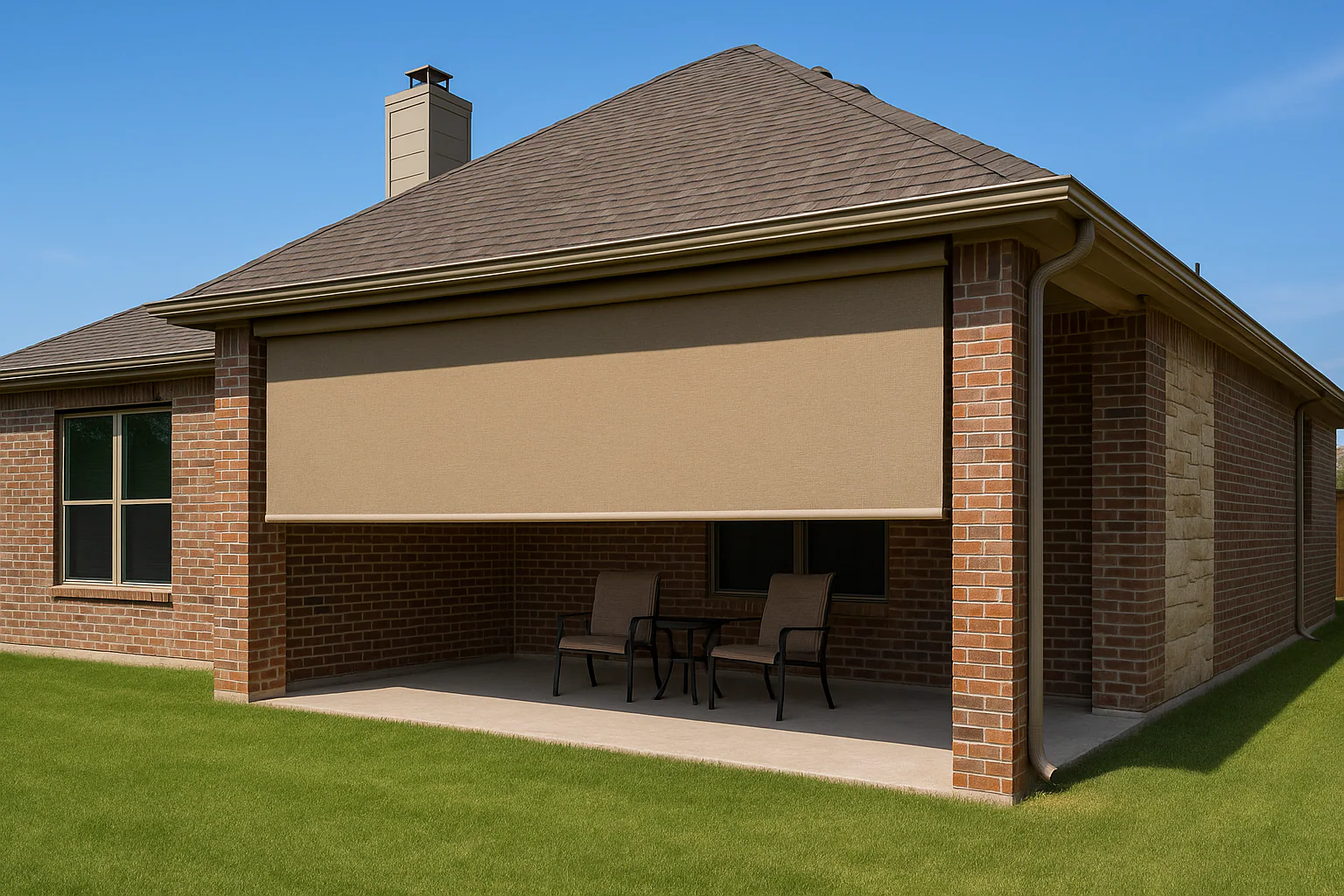
- Exterior Roller/Solar Shades: Manual or motorized rollers mounted at the beam line. Lower them to cut glare and heat; raise them for the view and breeze.
- Natural Woven Shades (Bamboo/Reed): Warm, filtered light. Best on covered patios; they don’t love storms but look fantastic in rustic or coastal designs.
- Polycarbonate or Metal Panels: Fixed overhead panels that filter UV and rain. Great when you want light, not a downpour. Here’s a quick, phone-friendly comparison:
| Shade Type | Best For | Weather Notes |
|---|---|---|
| Retractable Awning | Decks/patios needing on-demand shade | Retract during high winds; slope for runoff |
| Motorized Screens | Bug control + sun control | Good in gusts; choose rated fabric/tracks |
| Shade Sails | Large open spans, modern style | Needs strong anchors; remove for hail if possible |
| Louvered Pergola | Year-round control, premium look | Handles rain; higher upfront cost |
| Roller/Solar Shades | Covered patios with glare issues | Pick openness wisely (1–10%) |
You know what? More shade isn’t always better. Sometimes you want that warm “golden hour” while keeping the glare off your eyes. That’s where fabric choice and openness matter—a lot.
Material Choices That Stand Up to Texas Weather
The fabric you choose is as important as the frame. We specify Materials built for UV, wind, and the occasional hailstorm.
- Solution-Dyed Acrylic (e.g., Sunbrella): Rich color all the way through the yarn, excellent fade resistance, water-resistant with breathability. Great for retractable awnings and pergola canopies.
- PVC-Coated Polyester Mesh (e.g., Phifer, Textilene): Durable, dimensional stability, and excellent sun control. Perfect for motorized patio screens and exterior roller shades.
- HDPE Shade Cloth: Woven plastic with strong UV block, used for sails. Breathes well; resists mildew.
- Polycarbonate Roof Panels: Lightweight, UV-treated panels that let in light but screen UV. Tough; good in hail with the right thickness.
- Aluminum Louvers: Powder-coated, low maintenance, and stout against wind. Ideal for adjustable systems. A quick note on “openness” (how much you can see through mesh):
- 1–3%: Maximum glare and heat reduction; most privacy; view is muted.
- 5–7%: Balanced—keeps a view and cuts heat.
- 10%: Light shade, softer glare control; best when you want air and visibility. Color makes a surprising difference. Darker mesh often reduces glare better and preserves your view out; lighter mesh can reflect more heat but may show dirt less. We’ll show real samples on your actual patio because sunlight shifts everything.
Benefits You Can Feel: Comfort, Energy, Privacy
Why put shades outside instead of adding drapes inside? Because stopping the sun before it hits the glass is far more effective.
- Comfort that’s obvious: Many homeowners feel a 10–20°F swing on the patio surface, especially on pavers and composite decks.
- Lower bills: Exterior shading can reduce solar gain through glass dramatically—particularly on west exposures common across DFW. That eases afternoon spikes on your AC.
- Furniture protection: UV is sneaky. Even a partial shade schedule (say, 2–7 p.m.) slows fading and drying.
- Privacy, not a cave: Mesh shades let you see the garden while neighbors see a soft silhouette instead of your dinner plate. Honestly, comfort is the big one. When people start using their patio three nights a week instead of once a month, the whole house feels bigger.
Smart Features and Add-Ons
Shade should be easy—push a button, enjoy your space. That’s the bar.
- Somfy motors + remotes: Reliable, quiet. Add a wall switch, handheld remote, or app control.
- Wind and sun sensors: Awnings retract automatically when gusts pick up; screens drop when the afternoon glare hits.
- Smart home integration: Tie into Alexa, Google, or Control4 scenes. “Game time” could lower shades, switch on the fan, and light the grill zone.
- Comfort upgrades: Low-glare LED perimeter lighting, ceiling fans, and discreet heaters for cold snaps. Misters, too—used right, they feel like a tiny cloud floating by on August afternoons.
- HOA-friendly styling: Neutral fabrics, compact cassettes, and clean mounts that pass architectural review. Small detail, big difference: sealed side-tracks on motorized patio screens keep out mosquitoes and much of the oak pollen. If you’ve fought spring allergies, that’s a relief.
Installation 101: What to Expect
We keep installs straightforward and built to last. Let me explain how it usually goes for homeowners around Dallas–Fort Worth.
- Home visit + shade study: We look at your exposure and timing (that 4–7 p.m. window matters). We bring samples outside because inside lighting lies.
- Design + measure: Precise measurements, a clean mounting plan, and a talk through operation and clearances.
- Permits/HOA: We handle drawings and submittals. Dallas-area municipalities follow IRC-based rules; some neighborhoods have wind-load notes. We stick to rated anchors.
- Structure + flashing: On brick or stone, we use sleeve anchors or through-bolts into structural members. On siding, we add ledger support and proper flashing. Posts get concrete footings rated for our soil.
- Drainage + slope: Awnings need pitch (about 1/4″ per foot). Louvered pergolas get downspouts neatly tied in.
- Electrical: We set motor locations, drip loops, and protected runs. Licensed electricians for dedicated circuits when needed.
- Testing + training: We cycle everything, set limits, and walk you through care. Typical timeline:
| Step | What Happens | Approx. Time |
|---|---|---|
| Consult & Design | On-site visit, samples, measurements | 60–90 minutes |
| Approvals | HOA/permit (if required) | 1–3 weeks |
| Fabrication | Custom build + finish | 1–2 weeks |
| Install Day | Set, wire, test, clean up | 4–8 hours |
One small contradiction we’ll mention up front: heavier fabric blocks more heat but catches more wind. We pair fabric weight with the right frame and anchor pattern, so you get performance without stress.
Maintenance and Longevity
Good gear doesn’t ask for much—just a little seasonal care.
- Wash gently: Mild soap, soft brush, hose rinse. Skip bleach and high-pressure nozzles on fabric.
- Keep tracks clear: For screens, a quick vacuum or soft brush along the rails keeps things smooth.
- Retract for storms: If high winds or hail are forecast, retract awnings and, when possible, raise sails.
- Annual check: We can re-tension, spot-seal fasteners, and confirm motor limits. Motors from brands like Somfy often carry 5-year warranties; premium fabrics can run 8–10 years or more with care. And yes, pollen season happens. A spring rinse helps everything look crisp again.
Costs and Value in DFW
Every project is custom, but ballparks help you plan:
- Exterior roller/sun shades: $600–$2,000 per opening (manual to motorized, size-dependent)
- Motorized zip screens: $3,000–$6,000 per opening (larger spans cost more)
- Retractable awnings: $2,500–$6,500 (projection, fabric, and motorization drive price)
- Shade sails: $1,500–$4,000 (fabric + steel posts/anchors)
- Pergola canopies: $2,000–$5,000 (size + fabric system)
- Louvered pergola systems: $12,000–$25,000+ (structure + automation) Value shows up in two ways: you use your patio more (simple joy), and your AC feels less hammered on summer afternoons. If you’ve got big west-facing glass in places like Lakewood, Grapevine, or Mansfield, you’ll notice.
Why Dallas Pergola Company?
We live here. We build here. That means we know how a gust rips through an alley in Frisco and how a stone veneer in Highland Park hides structural members. Our team designs, installs, and supports pergola shades , retractable awnings , and motorized patio screens across the Dallas–Fort Worth area—Plano to Arlington, McKinney to Cedar Hill.
- Custom designs that fit your home’s style, not just the catalog photo.
- Rated hardware and anchors for local wind loads.
- Permits and HOA handled without headaches.
- Clean installs with flashing, drainage, and wiring done right.
- Clear warranties and friendly follow-up. We’ll help you choose smart—sometimes that means less shade in one spot, more in another. The goal is simple: a patio you actually use, even in August.
Ready to Bring the Shade? Call Us Today
If you’re picturing a cooler patio, fewer bugs, and weeknight dinners outside—let’s make it real. Dallas Pergola Company offers free, no-pressure consultations and clear pricing. Call us at 214-624-7083 or tap Request a Free Quote , and we’ll schedule a same-week visit when possible. We’ll bring samples, look at the sun angles, and recommend the right patio shades for your space and your budget. Your patio is closer than you think—just a little shade away.