Carport planning field guide
Quick take
Learn how to choose the best car port cover for shade, safety, and UV and weather protection. Compare materials, durability, sizes, and budget tips.
In this guide 12 sections
- Why a Car Port Cover Matters More in DFW
- Shade vs. Safety: Finding the Sweet Spot
- Materials That Handle Texas Heat (and Hail)
- Roof Styles That Work With Real Homes
- Size, Setbacks, and Driveway Realities
- Safety Features You’ll Be Glad You Added
- Real DFW Setups That Nail It
- Budget Talk Without the Guessing Game
- Timeline: What Happens and When
- Maintenance That Actually Sticks
- Style: Make It Look Like It Belongs
- Ready When You Are — Let’s Cover That Car
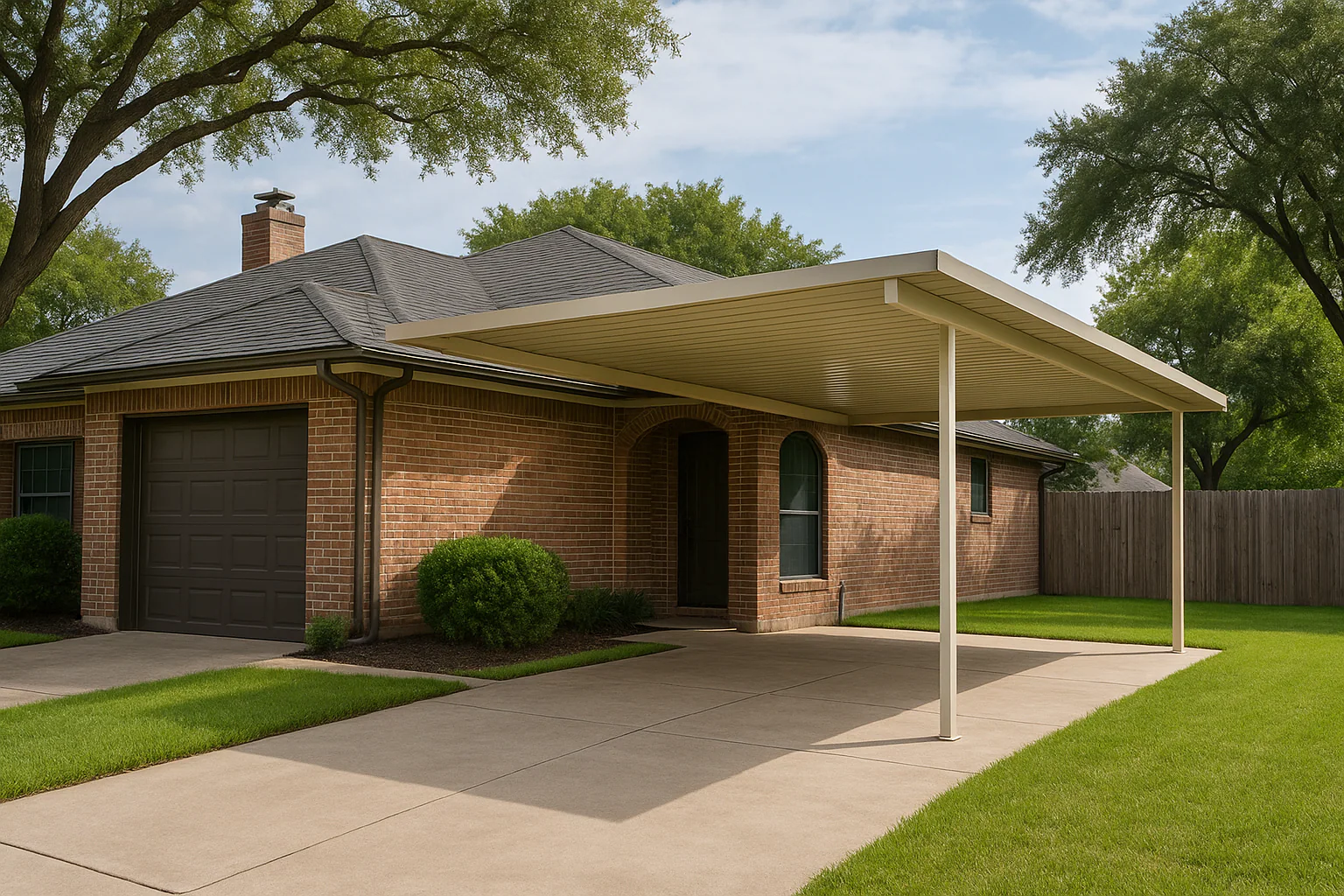
Shade in Texas isn’t a luxury; it’s armor. If you’ve watched a summer storm sweep through Dallas-Fort Worth, you know a car port cover isn’t just about comfort—it’s about protection that pays you back. Let’s talk about crafting shade and safety that fits your home, your vehicles, and your life.
Why a Car Port Cover Matters More in DFW
North Texas weather keeps you guessing—115-degree sun one week, surprise hail the next. A well-built car port cover shields your paint from UV fade, cushions hail hits, and reduces interior temps so you’re not burning your hands on the wheel. That’s comfort and care, wrapped together.
Here’s the thing: it also affects long-term value. Hauling groceries in a downpour is one thing; avoiding sun-bleached dashboards and dulled clear coat is another. And honestly, some insurers love covered parking because it reduces claims. One more perk? A good-looking cover boosts curb appeal, especially when it complements your roofline and trim.
Local note for DFW folks: city rules and HOAs can be strict about placements and finishes. We build covers that pass both the style test and the code test—so you’re covered before we even pour concrete.
Shade vs. Safety: Finding the Sweet Spot
Everyone wants deep shade. But safety—structural safety—is what lets shade stand for the long haul. We design for both.
- Shade you can feel: Solid roofing or high-density polycarbonate reduces heat soak and blocks UV. A Pergola carport with adjustable louvers softens light while keeping air moving.
- Strength you can trust: Posts, beams, and footings must resist wind uplift and lateral forces. (DFW gusts can be rowdy.) We size members correctly and use proper anchors—no shortcuts.
- Hail and impact: Thicker metal roofing and impact-rated polycarbonate help with storm durability. It won’t make hail “go away,” but it helps your cover—and your hood—come through better.
- Water management: Integrated gutters and downspouts control splash-back and ice patches in winter. Yep, we get those too.
You want it airy but stout, pretty but practical. It sounds like a contradiction. It isn’t. With the right specs, you get both.
Materials That Handle Texas Heat (and Hail)
Not all covers behave the same in the elements. Here’s a quick, plain-English look at common choices we use around Dallas-Fort Worth .
A quick word on roofs: Standing-seam metal is a favorite for storm strength and clean lines. Architectural shingles can match your home, though they add weight. High-quality polycarbonate works well when you want daylight without the oven effect.
We’ll recommend the mix that fits your style, budget, and lot layout—because the “best material for a carport in Texas” is the one that keeps its cool and stays put during a storm.
Roof Styles That Work With Real Homes
Your roof shape does more than top things off. It controls light, runoff, and style.
- Flat (with subtle pitch): Clean, modern, easy to tuck beside a garage. Needs proper drainage built in.
- Gable or A-frame: Classic look; sheds water fast and blends with most homes.
- Skillion/lean-to: Great against a side wall; simple, sleek, efficient.
- Cantilever: Fewer posts near the drive; handy for tight spots and wide doors.
- Louvered hybrid: Adjustable shade like a pergola but tuned for parking.
You know what? Even a small change—like adding a deeper overhang on the south/west side—can slash radiant heat. That’s the kind of tweak we like to sneak in.
Size, Setbacks, and Driveway Realities
We’ve seen it all across DFW: short aprons, steep drives, tall lifted trucks, you name it. Sizing right prevents dings and daily headaches.
- Measure your vehicles: Length, width with mirrors, and height with racks or lifts.
- Plan clearances: 9–10 feet wide per vehicle feels right; 8–9 feet clear height works for most SUVs and mid-size trucks.
- Mind the turn: A tight angle from the street may call for a wider opening or a cantilever design.
- Know your lot lines: Cities and HOAs often set side-yard and front-yard restrictions. Easements matter.
- Check slope: Steep drives need adjusted post lengths and footing depth.
We’ll confirm local code and HOA details, then sketch a layout that fits like a glove.
Safety Features You’ll Be Glad You Added
Some upgrades seem small—until a storm, late night, or tight parking turn proves their worth.
- Anchoring that means business: Deep footings, rated brackets, and hardware from brands like Simpson Strong‑Tie.
- Gutters and downspouts: Direct water away from the entry and foundation. No flash floods by the door.
- Lighting that welcomes: Low-glare LEDs with motion sensors for comfort and security.
- Bollards or hidden curbs: Subtle car-stoppers where walls or gas meters need protection.
- Non-combustible edges: Smart detail near property lines or grills.
We like good-looking builds. We also like builds that don’t move.
Real DFW Setups That Nail It
A few quick snapshots of what works around here:
- Plano hail-ready: Steel frame, standing-seam roof, oversized gutters for sudden downpours. The homeowners said summer felt “two shades cooler” pulling in.
- Oak Cliff narrow lot: Cantilevered aluminum with warm cedar fascia—no posts blocking the swing of the gate.
- Frisco HOA-friendly: Shingle-matched gable roof, trim painted to tie in with the garage. Approved on the first submission.
- Arlington dual-duty: Louvered car port cover that acts as an outdoor lounge on weekends. Park during the week, party on Saturdays.
Little details, big comfort.
Budget Talk Without the Guessing Game
Every project’s different, but a simple framework helps. These ranges reflect recent DFW builds and can shift with size, finishes, and engineering.
Two notes. First, permitting/HOA fees vary by city and neighborhood. Second, storm-hardening (thicker roofing, extra anchors) adds cost, but it’s money well spent in our climate.
We’ll line-item your quote so you can choose what matters most.
Timeline: What Happens and When
No two jobs are identical, but here’s a rhythm that keeps things smooth.
- Design chat and site check: We measure, sketch options, and discuss your must-haves.
- Engineering and permits: We prepare drawings and handle city submissions. Time varies by city; Dallas and Fort Worth each have their own pace.
- Fabrication and prep: We cut, coat, and stage components while coordinating with your schedule.
- Install: Usually 1–4 days on-site once materials are ready, weather allowing.
- Final walk-through: We test lighting, check drainage, and tidy up. You park under shade—done.
Spring can book fast thanks to hail season. If your goal is summer comfort, let’s start before the first big heat wave.
Maintenance That Actually Sticks
You don’t need a binder. You need five easy habits.
- Rinse: Hose off dust and pollen each season.
- Inspect: Twice a year, glance at fasteners, seals, and paint or stain.
- Clear gutters: Especially after storms and fall leaf drop.
- Trim: Keep branches off the roof to prevent scuffs and drips.
- Quick fix: Touch up scratches before rust or UV has time to work.
That’s it. Ten minutes here and there, and your cover stays sharp.
Style: Make It Look Like It Belongs
A cover that looks “tacked on” never feels right. We match roof pitch where it matters, echo your trim color, or add a cedar fascia that warms up a modern frame. On brick homes, a standing-seam roof in charcoal reads classic yet current. On stucco or contemporary builds, slim steel posts and a flat plane feel natural.
Form follows function, but both can look good. That’s our sweet spot at Dallas Pergola Company .
Ready When You Are — Let’s Cover That Car
Need shade that stands up to DFW weather and looks like it came with the house? We design and build car port covers that protect, cool, and elevate your curb appeal. Call us at 214-624-7083 or Request a Free Quote , and we’ll get you parking under real, Texas-tough shade.