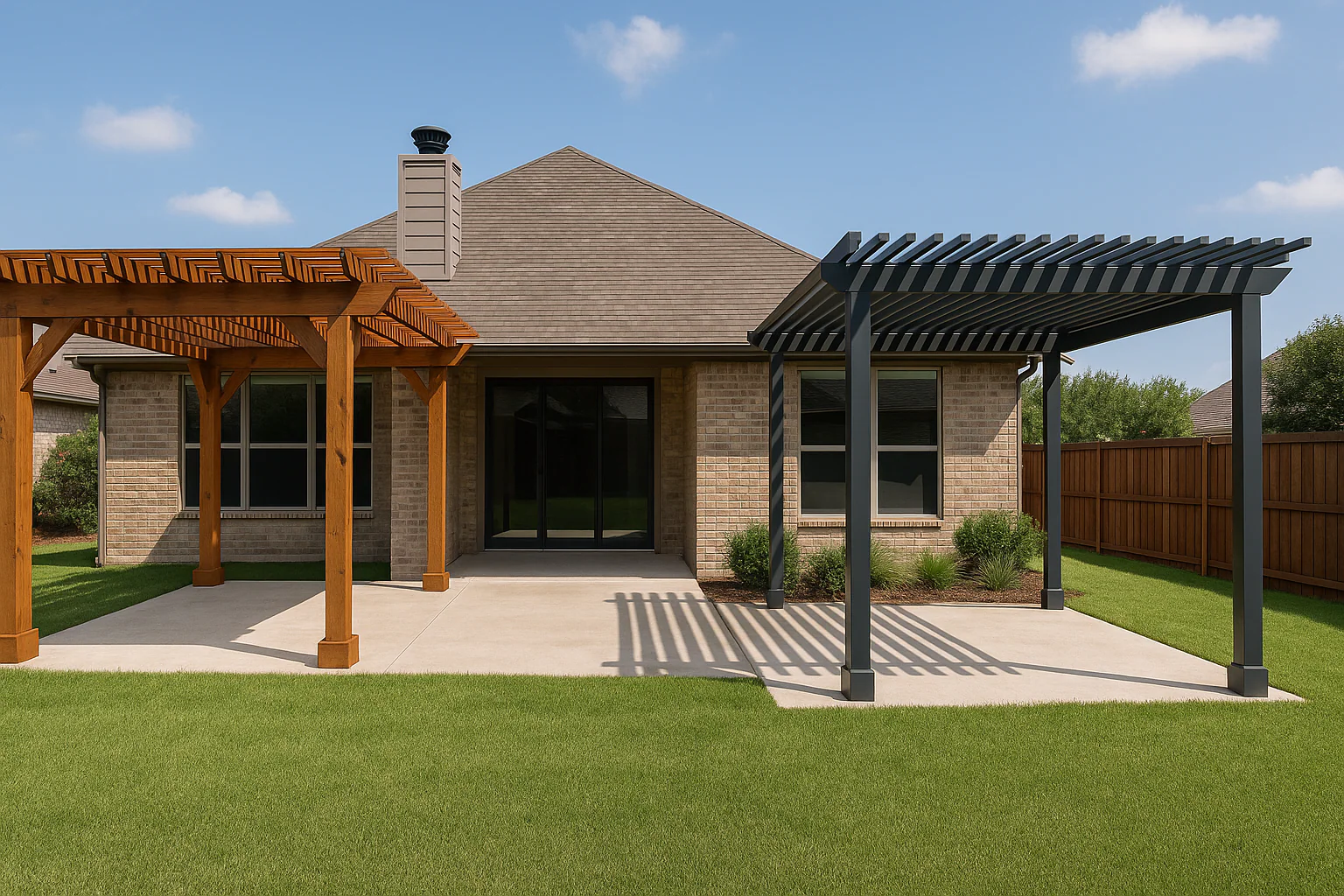
Materials and finishes field guide
Quick take
Planning a new backyard hangout? You’re probably torn between the warm look of real wood and the clean, never-needs-paint finish of metal. Here’s a…
In this guide 12 sections
- What really matters in Dallas–Fort Worth backyards
- Timber pergolas: Warm, classic, and made for lingering
- Aluminum pergolas: Clean lines, low upkeep, and modern features
- Side-by-side snapshot (because seeing it helps)
- Cost and value—translated for Dallas homes
- Shade, comfort, and the “DFW microclimate” trick
- Maintenance reality check (short and honest)
- Safety, code, and HOA notes you’ll appreciate later
- Which one fits you? A few quick scenarios
- Hybrid moves and clever add-ons
- How Dallas Pergola Company guides the choice
- Ready to turn that patio into your favorite room?
Planning a new backyard hangout? You’re probably torn between the warm look of real wood and the clean, never-needs-paint finish of metal. Here’s a straight-shooting guide from the folks who build both every day across DFW, so you can pick the Pergola material that fits your home, your style, and our Texas weather.
What really matters in Dallas–Fort Worth backyards
North Texas throws the whole weather book at your patio—triple-digit heat, sun that bleaches anything, gusty storms, occasional hail, and the odd freeze. Your pergola has to look great and shrug all that off. But the “best” material depends on two things: how you’ll use the space and how much upkeep you’re good with.
Let me explain. If you want warm, classic vibes and don’t mind light maintenance, timber is tough to beat. If you want modern lines and almost no upkeep, aluminum is a star. There’s no one-size-fits-all answer, but there is a right answer for you—and we’ll help you find it.
Timber pergolas: Warm, classic, and made for lingering
There’s a reason a timber pergola keeps showing up in backyard magazines. Cedar beams. The soft grain. Real shade that feels, well, natural. Around Dallas, we most often use western red cedar because it’s naturally rot-resistant and handles heat better than pine.
You’ll hear people say wood is high maintenance. Honestly, it’s more “light routine” than high drama. Stain every 2–4 years, rinse off dust, and keep vines trimmed. Cedar weathers to a silver patina if you skip stain—which some homeowners love. Span-wise, wood is strong, but long, skinny members can check or twist if not sized and anchored right. That’s where good design matters.
Why Folks Choose Wood
- Timeless look: that softens stone, brick, and landscaping.
- Custom details: arched cuts, thicker beams, corbels, and shade patterns.
- Comfortable shade: wood doesn’t get hot to the touch like metal.
- Easy repairs: one board can be swapped without color-matching metal coatings.
Why folks choose wood
What to Consider for Wood
- Maintenance: stain or seal on a schedule to keep color rich.
- Movement: wood breathes; expert joinery prevents sag or twist.
- Pests: cedar resists them, but proper clearances help.
What to consider
Material highlights we often recommend:
- Western red cedar for most homes—great balance of beauty and durability.
- Thermally modified wood if you want boosted stability with a modern vibe.
- Pressure-treated pine for budgets—best when painted or deeply stained.
If you’re going for a Hill Country feel or want your pergola to look like it’s always been part of the house, wood’s got soul. It just does.
Aluminum pergolas: Clean lines, low upkeep, and modern features
A powder-coated aluminum pergola brings a different energy—sleek, crisp, and easy to live with. We use architectural-grade, extruded aluminum with a baked-on finish. It doesn’t rot, doesn’t need stain, and laughs off the sun. For homeowners who want shade without the weekend to-do list, it’s a strong contender.
You can go with fixed slats for a simple, airy look or choose a motorized louvered pergola (think StruXure-style) that opens for sky and closes for rain. It’s this blend of shade control and clean design that wins a lot of people over—especially around pools or modern homes.
Why Folks Choose Aluminum
- Ultra low maintenance: rinse and done.
- Color stability: the finish resists fading and chalking.
- Integrated features: LEDs, fans, heaters, gutters, even screens.
- Stronger spans: with less bulk; great for wide patios.
Why folks choose aluminum
What to Consider for Aluminum
- Different feel: it’s crisp, not rustic; fantastic if that’s your style.
- Rain sound: on louvered systems, raindrops on closed blades are noticeable (some love it).
- Cost: motorized systems run higher than typical wood builds.
There’s also “wood-look” aluminum (like Alumawood) if you want fewer chores but still love that grain pattern.
Side-by-side snapshot (because seeing it helps)
Note: Costs vary by size, features, and site conditions. We’ll pin it down with a quick site check.
Cost and value—translated for Dallas homes
A simple 12×16 cedar pergola, professionally built and finished, often lands in the mid-to-high four figures, depending on beam sizes and details. Add upgrades—thicker posts, decorative cuts, polycarbonate rain cover—and you’ll climb from there.
Fixed-slat aluminum is often comparable to cedar. Step up to a motorized louvered roof with lighting, fans, and rain sensors, and you’re usually in the low five figures for that same footprint. It’s an investment, yes—but it’s also usable shade for nine months of the year in North Texas and a bump in curb appeal when it’s done right.
If you’re thinking resale, buyers notice a well-executed outdoor room. The clean lines of aluminum hit modern tastes; the warmth of cedar hits the heart.
Shade, comfort, and the “DFW microclimate” trick
Shade is the headline, but comfort is the plot twist. How your pergola throws shade depends on slat spacing, orientation, and roof style.
- Fixed timber rafters/purlins: Great dappled shade; we can thicken and tighten spacing for mid-summer.
- Motorized louvers: Adjust for sun angle; close for rain; open for winter light.
- Covers: Clear or tinted polycarbonate panels keep rain out while letting light through—popular over grills or dining sets.
A small design tweak goes a long way. Turn slats east–west to block harsh afternoon sun on a west-facing patio. Add a privacy screen on the west side, and suddenly August feels manageable.
Maintenance reality check (short and honest)
Here’s the thing: both Materials last in Dallas. The difference is how you spend time.
- Timber rhythm: Light wash in spring, re-stain every 2–4 years. In exchange, you get that rich, organic look.
- Aluminum rhythm: Hose it off and maybe a drop of dish soap. That’s about it.
A quick seasonal checklist:
- Spring: Rinse, check fasteners, re-seal wood if due.
- Summer: Clear leaves from beams and gutters (aluminum systems), trim vines.
- Fall: Tighten hardware; look for wear at footings.
- Winter: After a freeze, scan for hairline checks in timber; not a crisis, just natural.
Safety, code, and HOA notes you’ll appreciate later
- Footings matter: We design for local soil and wind loads; proper concrete piers prevent tilt or heave.
- Setbacks & HOA: Pergolas sit outside the “roofed structure” in many HOAs, but we still check height and location rules.
- Grill clearance: Keep heat and open flame away from posts and overheads. Aluminum and wood both need safe spacing.
- Electrical: Fans, heaters, and lighting require a dedicated, GFCI-protected circuit. We handle that permitting and wiring.
We’ll do the boring parts so you can enjoy the fun ones.
Which one fits you? A few quick scenarios
- You love classic Texas outdoors: Go cedar pergola with chunky beams and corbels. Add climbing jasmine for fragrance.
- You want set-it-and-forget-it: Choose aluminum pergola with a baked-on finish. Maybe add integrated LEDs.
- You entertain rain or shine: Pick a motorized louvered pergola that closes tight in storms and opens for stargazing.
- You’re near a Pool: Aluminum resists splash and chemicals; wood still works with the right finish.
- You’re budget-conscious but picky about looks: Cedar, smartly designed, checks both boxes.
You know what? Sometimes the right answer is what you’ll smile at every day when you step outside.
Hybrid moves and clever add-ons
Mixing materials can be the sweet spot:
- Steel or aluminum posts with wood beams for warmth up top and slim posts below.
- Aluminum frame with wood-look finish when you want grain without the upkeep.
- Rain management: Hidden gutters on louvered roofs or a low-profile polycarbonate sheet over a timber frame.
- Comfort gear: Fans, heaters, misters, and shades turn “nice” into “we live out here now.”
Small choices—post size, slat spacing, beam overhang—change the whole vibe. We’ll sketch options so you can see it before we build.
How Dallas Pergola Company guides the choice
We start with how you live, not just what looks cool on Pinterest. A quick consult, a look at your sun exposure, then a clean proposal that compares pergola in Dallas options side by side. We bring finish samples you can see in your own light. If you’re leaning technical, we’ll talk span tables and powder-coat specs. If you’re leaning aesthetic, we’ll show profiles, Colors , and real photos from nearby neighborhoods.
Our builds are engineered, permitted, and anchored right. You get a pergola that feels like it belongs—because it does.
Ready to turn that patio into your favorite room?
Whether you’re team wood, team aluminum, or still on the fence, we’d love to help you pick the perfect fit for your home. Call Dallas Pergola Company at 214-624-7083 to talk options, pricing, and timelines with a local pro who knows DFW sunlight and storms. Or, if you prefer, tap Request a Free Quote and we’ll schedule a friendly on-site visit—no pressure, just smart guidance and clear numbers.