Gazebos have been stealing the spotlight in gardens for centuries, and—surprise—they’re still doing it right here in North Texas. If you’ve ever pictured a shaded nook with a breeze and a good book, that’s the spirit of a gazebo. And yes, it pairs beautifully with the wide Texas sky and our love of easy outdoor living.
Contents
- 1 So…what is a gazebo, really?
- 2 Ancient roots, timeless appeal
- 3 The American chapter: from park bandstands to backyard stars
- 4 Why gazebos keep winning (especially in Dallas)
- 5 Materials and methods: old-world charm, modern build savvy
- 6 Gazebo vs. pergola vs. pavilion—what fits your Dallas backyard?
- 7 Styles that match DFW homes (without trying too hard)
- 8 Smart upgrades that feel like a luxury (but work every day)
- 9 North Texas seasons: how a gazebo works year-round
- 10 Budget and planning: a quick, honest snapshot
- 11 Your gazebo, your story—let’s build the spot everyone remembers
So…what is a gazebo, really?
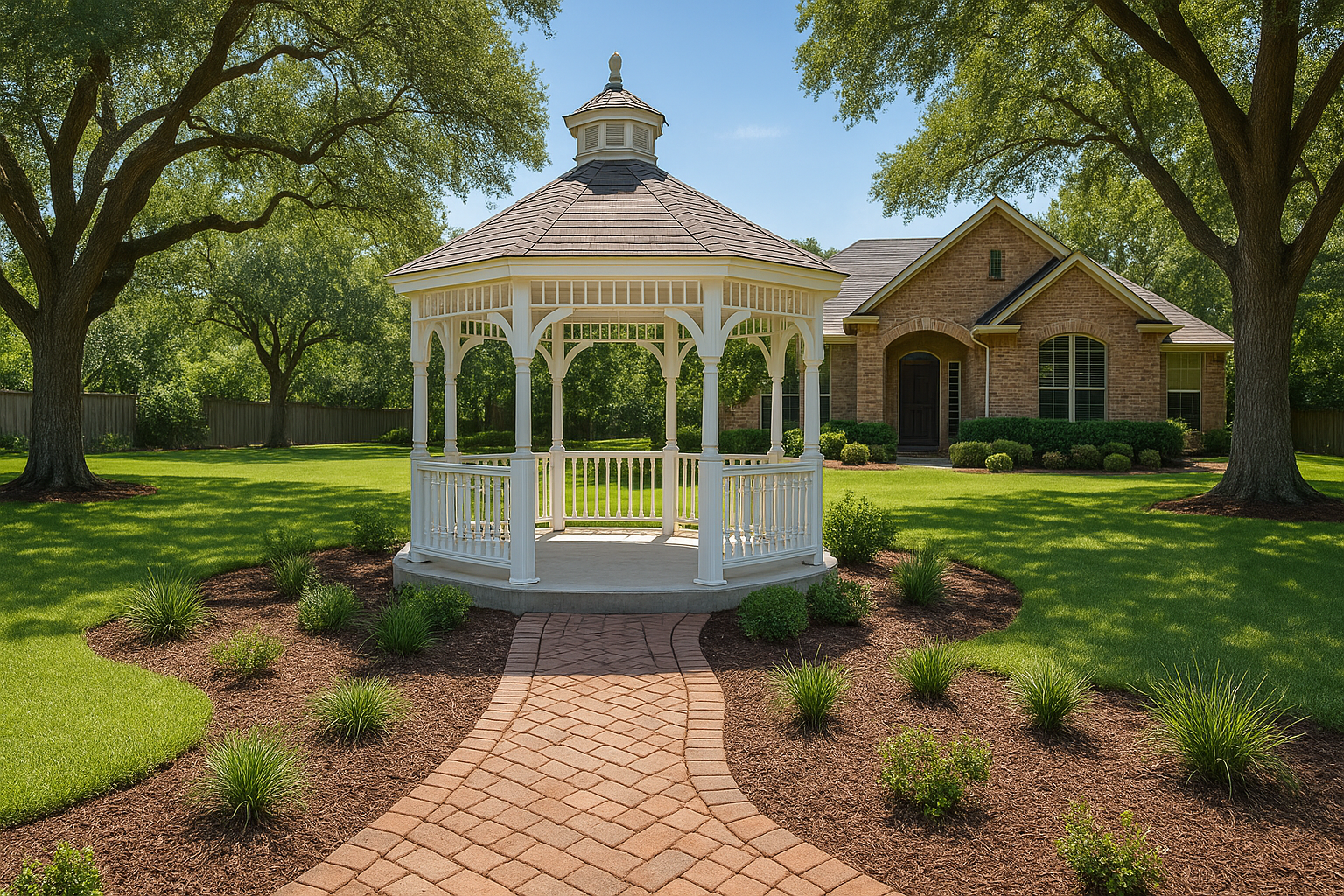
Let me explain. A gazebo is a freestanding, roofed garden structure with open sides. It’s usually round, hexagonal, or octagonal, though modern square gazebos look great with newer homes. It invites shade, airflow, and a view—like a front porch that decided to wander into the yard.
People mix them up with other structures, and that’s fair. Here’s the thing:
- Gazebo — Has a full roof and open sides (often with railings or screens). It’s a classic focal point.
- Pergola — Open-lattice roof that filters sun. Great for vines and dappled shade.
- Pavilion — Rectangular, full-roof structure with big spans; ideal for dining areas and outdoor kitchens.
You know what? They all have a place. But if you want a gentle breeze, a full shade canopy, and a “destination” spot in the yard, the gazebo checks every box.
Ancient roots, timeless appeal
The gazebo isn’t new. Garden pavilions were prized in Egyptian and Persian estates, then echoed through Greek and Roman villas. In East Asia, tea pavilions sat beside water to draw in cool air and quiet views—simple structures made for pause and presence.
By the Middle Ages, European gardens featured small open shelters as relief from sun and rain. Later, during the Renaissance and Baroque periods, gazebos showed up as refined follies—ornamental, yes, but still functional. They offered shade, vantage points, and a sense of arrival. That basic promise hasn’t changed: come sit, breathe, and look out.
The American chapter: from park bandstands to backyard stars
Victorian America adored gazebos—sometimes elaborate, sometimes modest—sprouting up in public parks as bandstands and in private gardens as quiet nooks. Cast iron, turned wood, and patterned shingles set the tone.
Then suburbia happened. Postwar ranch homes and bigger backyards made room for freestanding shade. The gazebo scaled down and moved closer to the grill. By the late 20th century, kit-built models (hello, Sears catalogs) made them accessible, and maintenance-friendly Materials like vinyl joined cedar and pine.
Here’s a quick, mobile-friendly snapshot:
| Era | Common Materials | Signature Look |
|---|---|---|
| Victorian Parks | Cast iron, cedar, cypress | Ornate trim, bandstand railings |
| Mid-Century Suburbs | Pressure-treated pine, asphalt shingles | Simple lines, practical roof pitches |
| Late 20th–Now | Cedar, steel, aluminum, composites | Clean profiles, hidden fasteners, screens and fans |
This arc matters in DFW. Our backyards are living rooms with sky-high ceilings. A gazebo gives the yard a “center,” without the bulk of a full pavilion.
Why gazebos keep winning (especially in Dallas)
Honestly, you can’t beat reliable shade on a 102-degree August afternoon. But the appeal goes beyond comfort.
- Cool shade, real airflow — A solid roof blocks harsh sun. Open sides let gusts roll through, which matters with that Lake Ray Hubbard breeze.
- Beautiful focal point — A gazebo anchors a landscape plan—works with pools, gardens, or a simple lawn.
- Social hub — Wrap-around benches or a small dining table turn it into a conversation pit for game day or after-school snacks.
- Mosquito defense — Add screens and a ceiling fan, and those summer biters get outplayed.
- Privacy with purpose — Lattice or slatted panels give you a soft screen from neighbors without closing off the yard.
- HOA-friendly design — With the right roof pitch and finishes, many local HOAs say yes faster than you’d think.
In the Dallas area, smart shade isn’t a luxury—it’s how you actually use your backyard.
Materials and methods: old-world charm, modern build savvy
Here’s the small contradiction: nothing looks warmer than real wood, but metals and composites can be lower upkeep. Both truths stand. We help you sort trade-offs based on budget, time, and style.
- Cedar — Beautiful grain, resists decay, takes stain well. Classic in Texas and a favorite for a natural look.
- Pressure-treated pine — Budget-friendly and durable with proper sealing; it can be dressed up with trim and paint.
- Aluminum/steel — Clean lines, excellent longevity, powder-coated color that won’t complain about the sun.
- Composite posts/trim — Low-maintenance accents that still feel upscale.
- Roofing — Asphalt shingles to match your home; standing-seam metal for bold modern style; or polycarbonate panels where filtered light is wanted.
Build science matters too. Even a small gazebo needs proper footings, galvanized fasteners, and hurricane ties for wind uplift (North Texas storms test everything). Electrical for fans and lights should run in conduit with GFCI protection. We design with load paths in mind, and we anchor to meet local code and HOA specs. It’s not glamorous, but it’s the difference between “cute” and “built right.”
Gazebo vs. pergola vs. pavilion—what fits your Dallas backyard?
We build all three at Dallas Pergola Company, so we’ll shoot straight:
- Choose a gazebo if you want full-coverage shade, a distinct garden focal point, and a quiet place to sit with a view.
- Choose a pergola if you want filtered sun, climbing vines, and a more open, architectural frame that blends into a patio.
- Choose a pavilion if you’re planning an outdoor kitchen, TV wall, or a big dining space that needs wide spans and deep shade.
You can also combine them. A pergola over the grill, a gazebo by the Pool, and a little path between? Works better than you’d think—one for cooking, one for lingering.
Styles that match DFW homes (without trying too hard)
Your gazebo shouldn’t look like it was dropped in from another zip code. It should nod to the house.
- Modern farmhouse (Prosper, Celina): Square plan, black metal roof, white-painted posts—simple and crisp.
- Mediterranean/Spanish (Frisco, Irving): Stuccoed columns, clay-look shingles, arched rails—warm and breezy.
- Mid-century (Richardson, Lake Highlands): Low-slung roof, thin steel posts, natural wood soffit—subtle and sleek.
- Traditional brick (Plano, McKinney): Cedar posts, crown-trimmed beams, shingles to match the home—timeless and friendly.
- Texas Hill Country vibes (Southlake, Keller): Stone piers at the base, standing-seam roof, rough-sawn cedar—rugged but refined.
Landscaping ties it all together. Drought-smart plantings—Mexican feather grass, lantana, agave, and shade-friendly Turk’s cap—keep water use sane while still framing your outdoor living space. If you’ve got a pool, we’ll talk splash-out zones and non-slip surfaces around entries.
Smart upgrades that feel like a luxury (but work every day)
Small adds make a gazebo earn its keep, all year.
- Ceiling fan — Moves air; also messes with mosquitoes.
- LED lighting — Uplights for mood, task lights for reading or game boards; dimmers for flexibility.
- Screens or curtains — Slide them open for a breeze, close them when bugs show up.
- Privacy panels — Slatted cedar or laser-cut metal for style and shade where you need it most.
- Power + data — Weather-rated outlets and conduit; great for speakers, chargers, or a small outdoor TV.
- Heaters or a fire bowl nearby — Use it in February without wearing three layers.
We coordinate finishes—hardware color, stain tone, roof choice—so the kit looks custom and the custom looks effortless.
North Texas seasons: how a gazebo works year-round
Summer is obvious: shade, fan, iced tea. But the other months matter too.
- Spring — A place to watch storms roll through (safely), with covered shelter for the first grilled burgers of the year.
- Fall — The best seat in the house for Friday night lights pregame gatherings; warm lights, cool air.
- Winter — Add a portable heater and a throw blanket and it becomes a quiet reading porch.
Maintenance shouldn’t be a burden. Cedar likes a fresh coat of stain every 2–3 years. After hail, peek at shingles or metal seams. After a wind event, we’ll check connections and anchor straps. Keep the fan clean, and it’ll repay you with a cooler seat every time.
Budget and planning: a quick, honest snapshot
Every yard is different, but planning is simple with a few rules of thumb:
- Size — 10’–12′ across feels cozy for four to six people; 14’–16′ suits a small dining table.
- Placement — Aim for shade paths; near a tree line or water feature; keep sight lines to the house.
- Permits/HOA — Many gazebos sail through faster than you’d guess. We handle drawings, specs, and submittals.
Costs vary by material and add-ons. Cedar with a shingle roof and a fan lands one place; steel with standing-seam and screens lands another. We’ll price it plainly, no jargon.
Your gazebo, your story—let’s build the spot everyone remembers
If you can picture your family sitting under a handsome gazebo on a Texas evening, that’s the right starting line. Dallas Pergola Company designs and builds structures that feel custom, stand up to DFW weather, and look like they belong with your home.
- Call us at 214-624-7083 to talk through ideas in real time.
- Request a Free Quote and we’ll map out sizes, materials, and a clear timeline.
Here’s our no-stress process:
- Listen and sketch — We learn your yard, your sun patterns, and your style.
- Design and price — Clear drawings, clear numbers, HOA-friendly specs.
- Build and enjoy — Solid footings, clean lines, and the final wipe-down before you sit and exhale.
You bring the people. We’ll bring the shade.