Thinking about adding shade and style to your backyard? A timber Pergola can look stunning, feel inviting, and make Dallas summers more bearable. Here’s a clear look at the costs, the payoffs, and what actually makes sense for homeowners across DFW.
Contents
- 1 Why homeowners love timber pergolas (and not just for looks)
- 2 What a timber pergola actually costs in Dallas-Fort Worth
- 3 The ongoing costs vs. the everyday wins
- 4 Timber vs. aluminum vs. vinyl—quick, fair comparison
- 5 Real-world ROI: value you can see (and value you feel)
- 6 DFW-specific details that matter (sun, storms, and small print)
- 7 Smart ways to stretch value without cutting corners
- 8 So, is a timber pergola worth it in DFW?
- 9 Ready to sketch your space? We’ll help you run the numbers
Why homeowners love timber pergolas (and not just for looks)
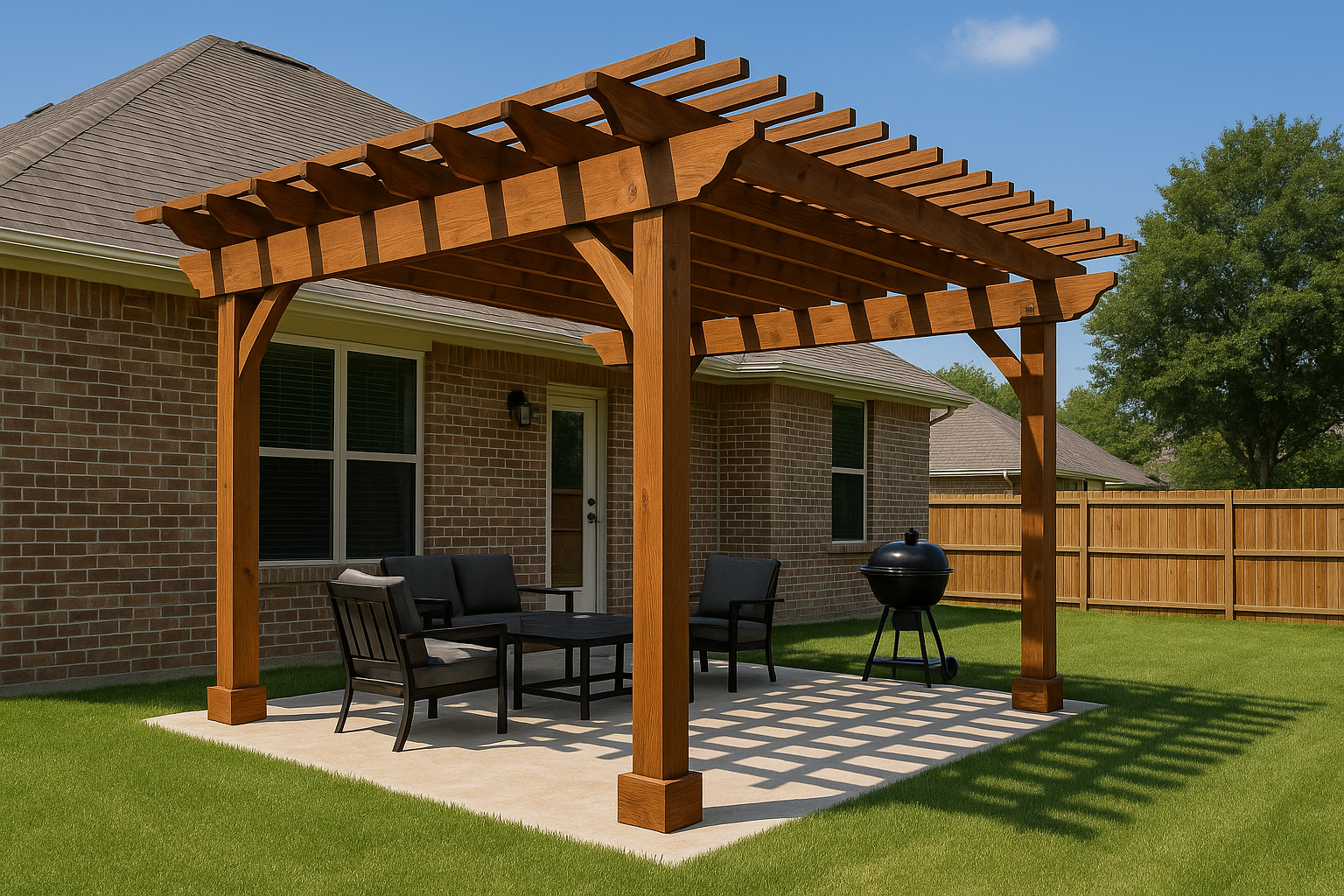
A timber pergola changes how a yard feels. Wood softens the space, adds warmth, and frames the sky without blocking it. Add a fan, a few string lights, and—suddenly—you’ve got an outdoor room that works for both Saturday morning coffee and Friday night fajitas.
But let’s get practical. In North Texas, shade is comfort. A pergola staged near a west-facing window reduces late afternoon glare and heat on your walls. It won’t cool your house like new insulation, sure—but it does help your AC work a little less when it matters most. And there’s something else: wood gives you flexibility. You can adjust rafter spacing for more shade, add a canopy later, or integrate a privacy screen if your neighbor’s second-story window stares straight at your grill.
You know what? People use yards that feel finished. A pergola gives a destination—a place where the chairs stay put and the kids actually hang out.
What a timber pergola actually costs in Dallas-Fort Worth
Every project has variables—size, wood type, footing depth, attachments, accessories—but here’s a grounded look at installed costs we see across the Metroplex.
| Wood Type | Typical Installed Cost (per sq. ft.) | Maintenance & Lifespan |
|---|---|---|
| Pressure-Treated Pine | $30–$45 | Re-stain every 1–2 years; 10–15+ years with care |
| Cedar (DFW favorite) | $45–$75 | Re-stain every 2–3 years; 15–25+ years |
| Redwood | $60–$90 | Re-stain every 2–3 years; 20–30+ years |
| Ipe/Hardwoods | $90–$140 | Oil or leave to patina; 25–40+ years |
Note: Complex designs (curved cuts, heavy beams), steel brackets, privacy screens, lighting, and fans add to the ticket, as do engineering needs for larger spans.
What moves the number most:
- • Size and span: Bigger footprints and long spans need beefier beams and footings.
- • Wood species: Cedar is the DFW sweet spot for durability, weight, and appearance.
- • Finish and color: Factory stains last longer; on-site stains are flexible but need more upkeep.
- • Accessories: Integrated lights, outlets, a fan, or a retractable canopy raise cost but boost everyday comfort.
- • Foundation: Proper piers or footings (often to frost depth and beyond for wind) are a must in stormy seasons.
A practical example: a 12′ x 16′ cedar pergola with 6×6 posts, decorative end cuts, quality stain, fan wiring, and anchored piers often lands between $10,000 and $16,000 depending on details.
The ongoing costs vs. the everyday wins
Let me explain the “hidden” costs. They’re not scary—just good to know.
- • Finishing/stain: Expect $300–$800 every 2–3 years for DIY stain/seal on a mid-size pergola; $900–$2,000 if professionally done. Clear finishes look amazing but need the most love. A pigmented stain lasts longer in the Texas sun.
- • Hardware check: Annual look-over for fasteners, brackets, and any movement—free if you do it, modest if we tune it up.
- • Cleaning: Quick wash once or twice a year keeps mildew off and wood happy.
And the wins:
- • Better outdoor living: It’s the comfortable kind of shade—filtered, breezy, and easy on the eyes.
- • Energy help: Shade on west/south exposures can reduce heat gain around your patio doors and windows.
- • Furniture protection: Cushions last longer. So does that grill finish you actually like.
- • Event-ready space: Parties, watch games, weeknight dinners—your yard becomes a usable room.
Is there work involved? A little. Does the payoff show up every time you step outside? Absolutely.
Timber vs. aluminum vs. vinyl—quick, fair comparison
We build wood because it’s timeless and customizable, but we’ll shoot straight about the trade-offs.
| Material | Upfront Cost (DFW) | Maintenance & Feel |
|---|---|---|
| Timber (Cedar/Pine) | $30–$75+ per sq. ft. | Needs stain; warm, natural, highly customizable |
| Aluminum | $55–$100+ per sq. ft. | Low maintenance; crisp look; can feel cooler to the touch |
| Vinyl | $35–$65 per sq. ft. | Low maintenance; limited color; less structural flexibility |
If you want organic texture, generous beam sizes, and that “Texas lodge” vibe, timber wins. If ultra-low maintenance is your north star, aluminum can be the right call. Honestly, both have their place—we just find DFW homeowners love the warmth and options of wood.
Real-world ROI: value you can see (and value you feel)
Here’s the thing: outdoor living often returns more than it costs—not 100% in pure resale, but strong value in both appraised numbers and day-to-day use.
- • Resale appeal: Agents across North Texas tell us a finished outdoor living area helps homes photograph better and show stronger. A quality pergola often nets a 50%–80% return on investment at resale, depending on neighborhood and overall yard.
- • Time outside: You’ll use your patio more. Morning coffee. Sunday burgers. Homework at the picnic table. That “invisible” value adds up.
- • Staging for upgrades: A pergola sets the framework for later add-ons—built-in kitchen, pavers, a privacy wall, or even a roof conversion down the road.
Is a pergola a stock or a bond? Neither. It’s more like a great sofa and quality windows combined: comfort now, value later.
DFW-specific details that matter (sun, storms, and small print)
North Texas brings unique conditions. We design for them.
- • Sun and orientation: Western sun is harsh. We can tighten rafter spacing, angle slats, or add a shade canopy where it counts.
- • Wind and storms: Posts should anchor to proper piers. We use rated hardware and connections to resist uplift—critical in spring storm season.
- • Soil: Expansive clay moves. Proper footings and post bases keep wood off-grade and out of splash zones.
- • Fans and lights: Outdoor-rated fans are game changers; low-voltage lights make nights cozy without glare.
- • Permits and HOA: City of Dallas and surrounding municipalities may require permits—especially if the structure is attached, large, or has electrical. HOAs often want drawings and finish samples. We handle the paperwork so you don’t have to wonder what’s allowed.
- • Finish choice: In our sun, semi-transparent stains last longer than clear coats. Cedar loves a mid-tone that protects without hiding its character.
Small digression that loops back: some folks ask about screens. Pergolas don’t block bugs like a screened porch, but we can add side screens or a soft canopy for a surprisingly calm, covered feel without committing to a full room.
Smart ways to stretch value without cutting corners
Design is where dollars go further. A few field-tested ideas:
- • Right-size the footprint: A 12′ x 12′ works for a lounge or dining set; 12′ x 16′ is the “Goldilocks” for most back patios.
- • Orient for shade first: Turn the beams to block afternoon sun; the angle matters more than people think.
- • Go cedar where it shows: Use cedar for the visible frame and consider pine for hidden or secondary elements.
- • Pre-wire now: Add conduit for a future fan or lights while everything’s open—it’s pennies now, dollars later.
- • Choose the right top: Open rafters are classic; add purlins or a retractable canopy for extra shade. Polycarbonate panels work if you want rain protection without going full patio cover.
- • Stain once, well: A good oil-based or hybrid stain, properly applied, saves time and money over the first few years.
- • Phase it: Build the structure first. Add the privacy wall, kitchen nook, or fire feature when budget allows.
We like making the math work. It’s part craft, part planning, and a little bit of “how do you really live out here?”
So, is a timber pergola worth it in DFW?
Short answer: for many homeowners, yes. The combination of comfort, curb appeal, and flexible design makes a timber pergola one of the highest-impact backyard upgrades. It’s not zero-maintenance—you will re-stain. But the trade-off brings character you can see and shade you can feel.
If you value warmth over a purely modern look, want a space that grows with your plans, and live with plenty of Texas sun (hello, 3 p.m. in August), a cedar pergola hits the sweet spot for cost vs. benefit.
Ready to sketch your space? We’ll help you run the numbers
If you’re in the Dallas–Fort Worth area and want straight answers on design, cost, and timing, Dallas Pergola Company is here to help. We’ll map the sun, check setbacks, talk wood and finish, and give you a clear proposal that fits the way you live outside.
Call us at 214-624-7083 or Request a Free Quote today.