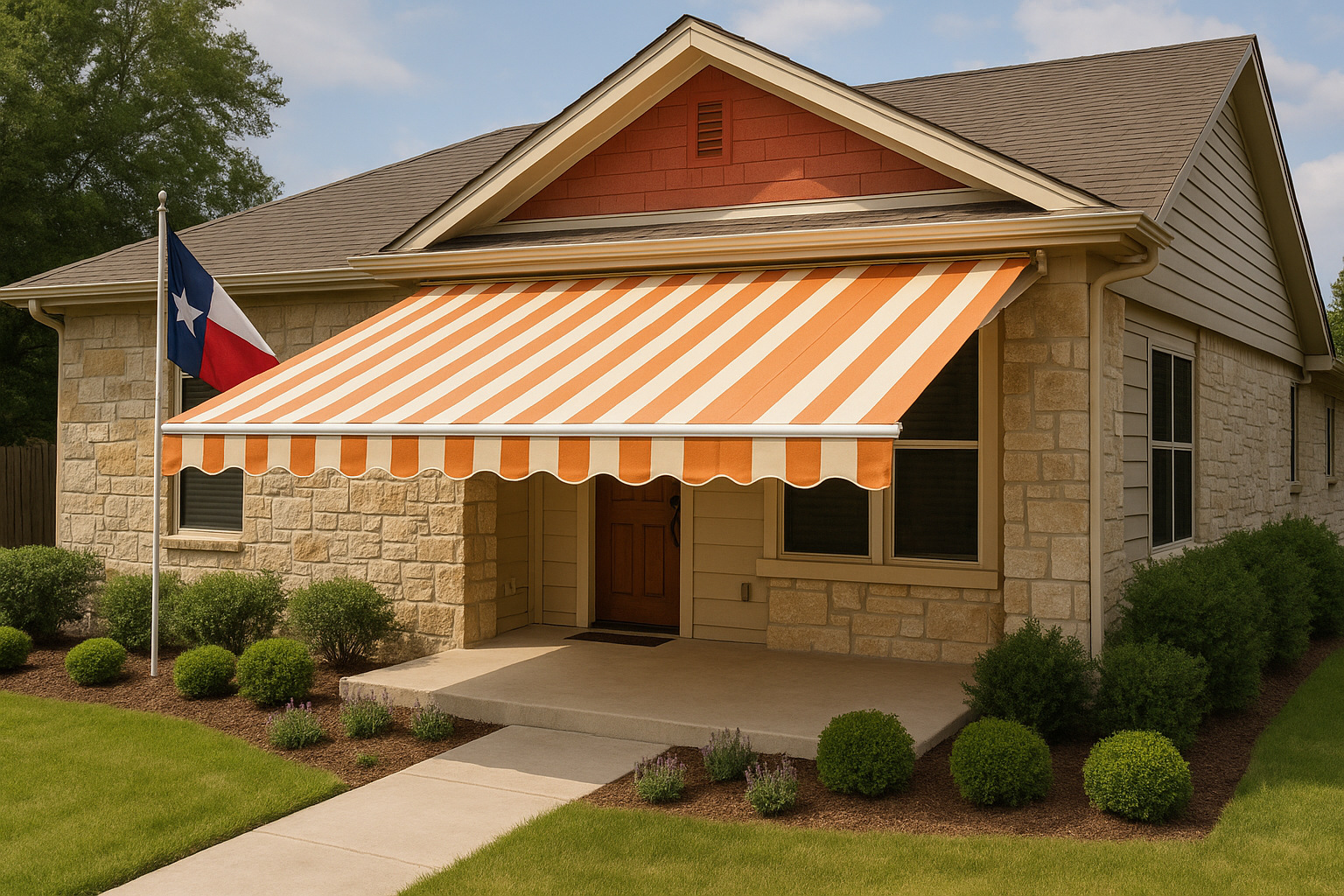
Shade that actually works when you need it—simple ask, right? In North Texas, your awning pulls long hours against sun, wind, and the occasional sideways rain. A little care keeps it looking sharp and working smooth, season after season.
Contents
- 1 Why maintenance matters more in North Texas
- 2 The five-minute weekly once-over
- 3 Monthly cleaning: fabric, metal, and vinyl done right
- 4 The hardware: arms, tracks, and tension that keep everything smooth
- 5 After the storm: hail, gusts, and “Did you hear that?”
- 6 Seasonal playbook for DFW patios
- 7 Stains, mildew, and bird “gifts”: practical spot-cleaning
- 8 What not to do (even if the internet says so)
- 9 Little issues, clear fixes: quick reference
- 10 When to call a pro (and why it’s worth it)
- 11 Ready to shade smarter? We’re here to help.
Why maintenance matters more in North Texas
Here’s the thing: the Dallas-Fort Worth climate is no joke. We bounce from blazing UV to spring storms to dust and oak pollen—sometimes in the same week. That combo wears on fabric and hardware, even when the awning looks fine from the patio door.
- Longer life, fewer surprises. Regular awning maintenance can extend the life of a retractable awning by years.
- Better shade performance. Clean fabric blocks heat and glare more efficiently—yes, your A/C notices.
- Curb appeal stays crisp. Stains and mildew spread fast in humidity; early cleaning stops it cold.
It may sound like extra work. Honestly, it’s more like some small, doable routines—five minutes here, 15 there—that prevent the big, annoying stuff.
The five-minute weekly once-over
You know what? Most Awnings don’t “fail”—they get neglected. A quick habit keeps headaches off your calendar.
- Light debris sweep. Use a soft broom or brush to knock off leaves, oak tassels, and dust. Don’t forget the top edge and valance.
- Run it out; run it in. For a retractable awning, extend fully and retract once to keep the fabric tracking true.
- Spot check hardware. Peek at brackets, arms, and front bar. If anything looks crooked, stop and note it.
- Gutter glance. Overflowing gutters spit grime onto fabric. Clear the section near your awning.
That’s it—truly five minutes. The payoff? You catch little issues before they become Saturday projects.
Monthly cleaning: fabric, metal, and vinyl done right
Different awning Materials like different care. Mild soap, cool water, gentle touch—that’s your north star. Bleach can be okay for some acrylics like Sunbrella, but always check the tag or the maker’s care guide first.
Recommended pairings:
| Material/Fabric | Safe cleaner | Suggested frequency |
|---|---|---|
| Solution-dyed acrylic (e.g., Sunbrella) | Mild dish soap; diluted bleach for mildew (per manufacturer) | Monthly rinse; deep clean each season |
| Polyester/acrylic blends | Mild soap only, no bleach | Monthly rinse; spot clean as needed |
| Vinyl-coated fabric | Mild soap; specialized vinyl cleaner | Monthly wash; treat for mildew if needed |
| Powder-coated aluminum frame | Mild soap and water | Monthly wipe-down |
Simple routine:
- Hose down with low pressure to float dirt off—no pressure washer tip up close.
- Mix a bucket of cool water with a few drops of dish soap (Dawn works).
- Gently scrub with a soft brush, working in sections from bottom to top.
- Rinse thoroughly. Any soap left behind attracts dust again.
- Let it dry fully before retracting—wet fabric retracted = mildew condo.
For UV and water repellency on acrylics, brands like 303 Fabric Guard or Scotchgard Outdoor Water Shield can help. Test a small spot first. If you’re not sure what fabric you’ve got, snap a photo of the label or stitching and keep it on your phone for reference.
The hardware: arms, tracks, and tension that keep everything smooth
Awnings move. Movement means parts, and parts like a bit of attention.
- Bolts and brackets. Look for loose fasteners at wall mounts and support brackets. If you see gaps, call a pro—tightening into masonry or brick needs the right anchors.
- Pivot points and joints. Use a dry silicone spray on moving joints (light coat). Avoid greasy lubes around fabric, and skip heavy oils that attract grit.
- Tension check. The front bar should stay level when extended. If it dips or the fabric sags, tension may need adjustment.
- Motors and controls. For motorized setups (Somfy is common), run a full extend/retract monthly. If the motor hesitates or chatters, stop—don’t force it.
Quick note on WD‑40: it’s great for displacing moisture, but it’s not a long-term joint lubricant. Save it for stuck screws, not pivot arms.
After the storm: hail, gusts, and “Did you hear that?”
DFW storms love a surprise entrance. When the sky calms, give your awning a fast safety check.
- Fabric sweep. Look for new tears, punctures, or stretched seams. Small tear? Tape it with fabric repair tape until it can be restitched.
- Frame sightline. Stand back. If anything bows or sags, don’t operate it. Bent arms can bind and rip fabric.
- Mount check. Scan the wall line. Any cracking stucco or loose lag shields calls for a professional.
- Electrics. If you took a power flicker, re-pair your remote or app if needed. Some wind sensors need a battery refresh after rough weather.
Pro tip: If you’re out when winds kick up, retract the awning and secure it. Many folks leave it extended “just for a minute” and the gust gets them. We’ve all been there once.
Seasonal playbook for DFW patios
Our seasons aren’t mild; they’re…busy. This quick checklist keeps your awning shade ready.
Spring
- Deep clean fabric after pollen season.
- Reapply fabric guard on acrylics for water beading.
- Inspect stitching—winter cold can stress seams.
Summer
- Angle the pitch to block late-day west sun.
- Rinse monthly to remove dust and sprinkler minerals.
- Mind heat sources—move grills at least 3–4 feet from fabric and arms.
Fall
- Remove leaves from the cassette and top edge.
- Touch up hardware paint with a matching enamel (Rust-Oleum works) to prevent rust.
- Check wind sensor batteries before cold fronts.
Winter
- Retract during freeze warnings to avoid ice load.
- Cover if stationary (non-retractable) with a breathable cover; avoid trapping moisture.
- Quick mid-winter rinse on a warm day to clear soot and dust.
Stains, mildew, and bird “gifts”: practical spot-cleaning
Let me explain the easy, low-risk way to beat stains without wrecking coatings.
- General grime. Mild soap + soft brush. Rinse until clear water runs.
- Mildew on acrylics like Sunbrella. If the tag allows, use a diluted bleach mix (up to 1 cup bleach per gallon of water with a little soap). Apply carefully, wait a few minutes, scrub gently, then rinse thoroughly. Protect plants below.
- Tree sap. Use isopropyl alcohol on a cloth; blot, don’t rub hard. Rinse afterward.
- Bird droppings. Pre-soak with soapy water, then brush. Acidic droppings etch coatings if left too long.
- Hard water spots. White vinegar diluted 1:1 with water can help (not on uncoated metals). Rinse right away.
Always test a small, hidden area first. And don’t forget: letting the fabric dry fully before retracting is half the battle against mildew.
What not to do (even if the internet says so)
A few common mistakes cost homeowners more than a service call.
- Don’t pressure wash up close. High PSI can fuzz acrylic fibers and force water into seams.
- Don’t use harsh scrub pads. They break down protective coatings; use a soft nylon brush.
- Don’t retract while wet. If rain catches you, extend it later to dry.
- Don’t grill directly under it. Heat and grease will stain and warp. Give it breathing room.
- Don’t hang heavy plants or lights from the front bar or arms. They’re balanced for fabric load, not décor weight.
- Don’t ignore small tears. A one-inch tear on Tuesday becomes a ten-inch headache by Saturday.
We get the temptation—fast fixes feel efficient. But the gentle route wins with fabric and powder coat.
Little issues, clear fixes: quick reference
Sometimes it helps to connect the symptom with the simple fix.
| Problem | Likely cause | Quick fix |
|---|---|---|
| Fabric sags in the middle | Low tension; water pooling history | Stop using in heavy rain; call for tension reset |
| Jerky retraction | Dirty tracks/joints; low battery in remote | Clean and silicone-spray joints; replace remote battery |
| Chalky streaks on fabric | Oxidizing gutter or fascia above | Clean the fascia; add a drip edge or gutter guard |
| Rust at bracket bolts | Coating nicked; water exposure | Light sand, touch-up paint; seal fastener heads |
If the fix involves ladders, tall brick, or motors—skip the DIY and bring in a tech. Safety first, shade second.
When to call a pro (and why it’s worth it)
Not every squeak needs a service call. But a few signs do:
- Bent arm or twisted front bar. Operating it can rip fabric or stress the motor.
- Seam separation or long tears. These need machine stitching or a fabric panel replacement.
- Motor stalls or hums. Could be a capacitor, limit switch, or wiring—none are DIY-friendly on a ladder.
- Loose wall mounts. You need proper anchors, torque, and sometimes fresh substrate.
Here’s the upside: a one-hour tune-up can extend the life of your patio shade and keep warranties intact. Plus, a technician can adjust pitch for better late-day coverage, which feels like free square footage on hot afternoons.
Ready to shade smarter? We’re here to help.
If you want your awning shade to pull through this DFW weather—clean, quiet, and dependable—Dallas Pergola Company has your back. We service and install Pergola and awning systems across Dallas-Fort Worth, and we’re happy to handle anything from a seasonal tune-up to a new retractable awning with wind sensors.
- Call us: 214-624-7083
- Request a Free Quote
Prefer quick scheduling? Tell us about your space, your sun exposure, and your style. We’ll recommend the right fabric, pitch, and features for cooler afternoons and better evenings outside—without the guesswork.